What Is Brazilian Zouk? History, Music and Origins

Written by Chantal ❤️
Brazilian Zouk is a partner dance that developed in Brazil in the early 1990s, evolving from Lambada.
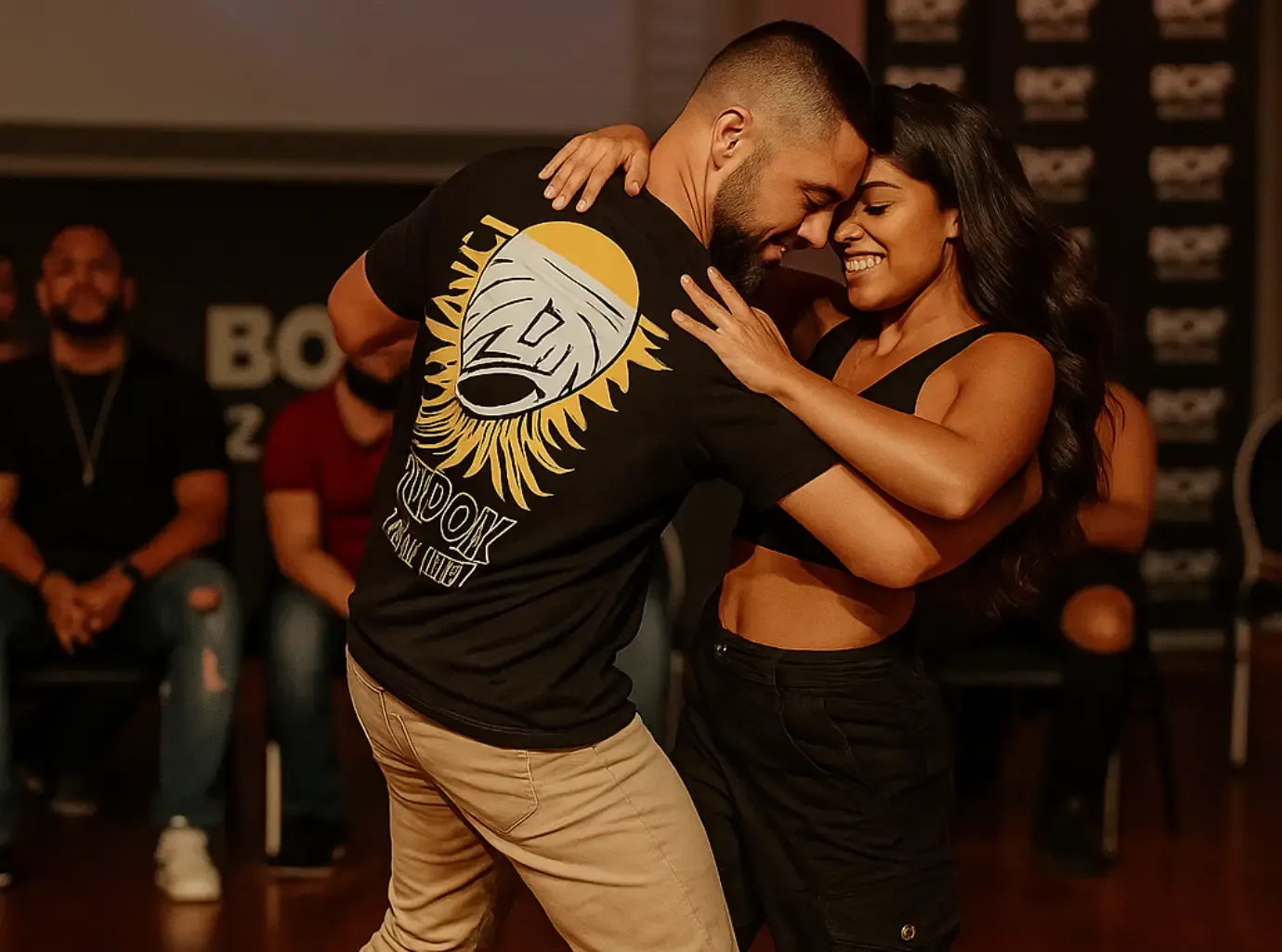
Today, the dance is known for its fluid movements, partner connection, musicality, and characteristic torso and head movements. It is also practiced by communities around the world and can be danced to a wide variety of musical genres.
But there’s one question that often comes up, especially among people discovering the dance for the first time: if Brazilian Zouk originated in Brazil, why is it called Zouk?
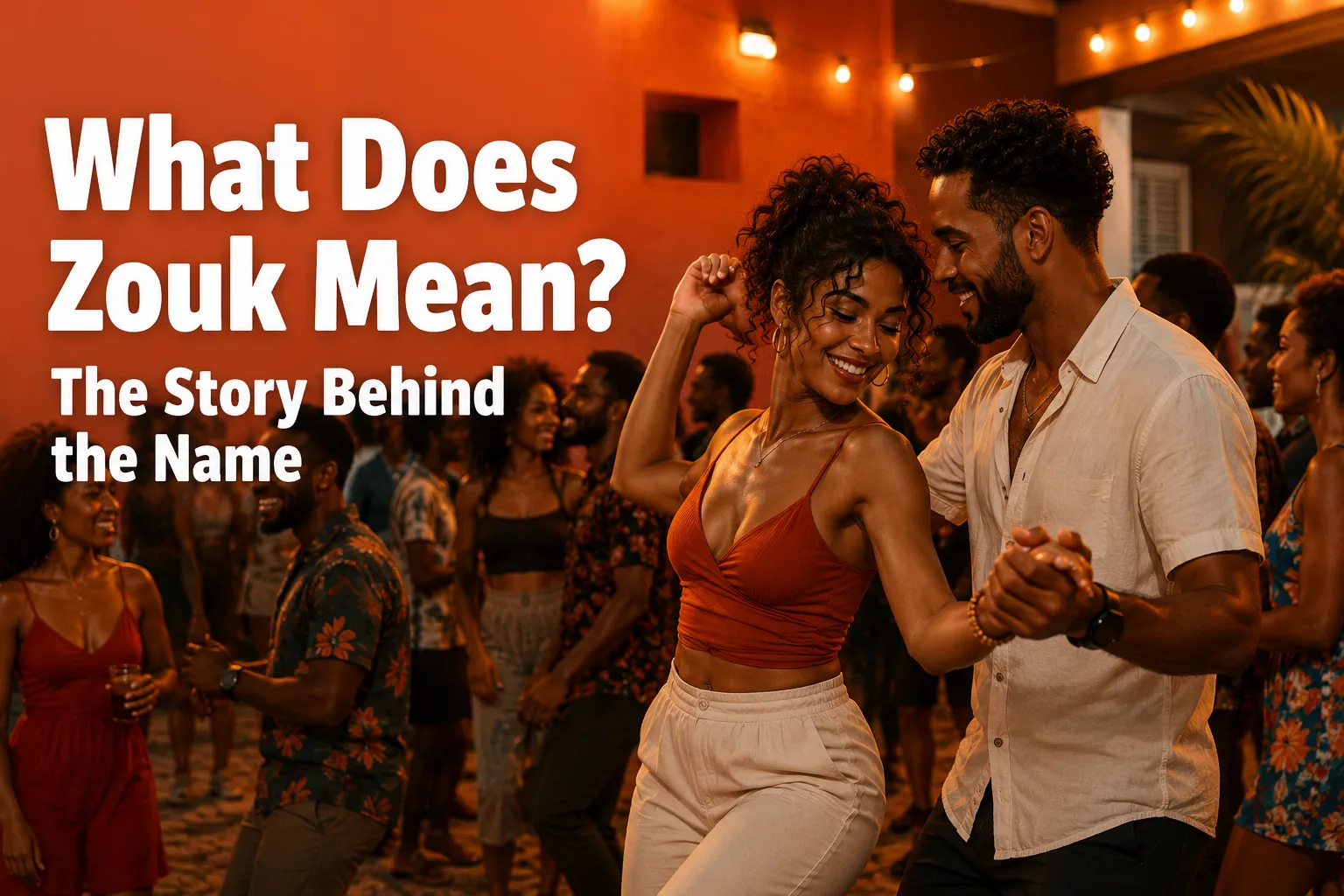
To answer that, we need to go back to Lambada and understand an important distinction: Zouk can refer to Caribbean music and dance, while Brazilian Zouk is the name of the Brazilian dance.
Where Did Brazilian Zouk Come From?
The history of Brazilian Zouk is directly connected to Lambada.
During the 1980s, Lambada became hugely popular in Brazil and later gained international recognition. By the early 1990s, however, its popularity as a commercial phenomenon had begun to decline.
That didn’t mean people simply stopped dancing.
According to District Zouk, dancers were already using different kinds of music to dance Lambada, including Caribbean Zouk music associated with places such as Martinique and Guadeloupe. As Lambada music became less prominent, Zouk music became increasingly common at dance parties.
Dance IM, based in Australia, also describes this period as a time when dancers began exploring new rhythms and adapting Lambada techniques to Zouk music, which had a slower tempo.
This change in music also opened up new possibilities for the dance itself. Movements were adapted, new techniques began to emerge, and other influences became part of the process.
It was a gradual transformation, rather than a specific moment when someone simply decided to create a new dance.
Why Is It Called Brazilian Zouk?
This is where the terminology can get a little confusing.
Zouk existed before Brazilian Zouk.
The term was already associated with Caribbean music and dance from the French Antilles. When Brazilian dancers began using this music to dance, the name of the music also became associated with the dance that was evolving in Brazil.
The Brazilian Zouk Dance Council (BZDC) explains that during this transitional period, the term “French Lambada” was informally used in reference to music with French/Creole lyrics. Over time, the dance came to be called simply Zouk.
District Zouk also documents the use of names such as Zouk-Lambada during this process.
But there was a problem: a music genre and dance called Zouk already existed in the Caribbean.
As the Brazilian dance developed its own identity and began spreading internationally, Brazilian Zouk came to be used to distinguish it from Caribbean Zouk.
There is another layer to this history. Some accounts within the dance community also connect the change in terminology to the highly sexualized image Lambada acquired during its international peak.
Since different narratives give this factor different levels of importance in the adoption of the new name, it is more accurate to treat it as one interpretation of this period rather than the sole explanation for the emergence of the term Brazilian Zouk.
The most important thing to remember is:
Zouk and Brazilian Zouk are not the same thing.
Who Created Brazilian Zouk?
This question doesn’t have an answer as simple as pointing to one person.
Lambada’s transformation happened over time and involved different teachers, dancers, and communities.
In Rio de Janeiro, however, Renata Peçanha and Adílio Porto are recognized as key figures in this process.
The Brazilian Zouk Dance Council describes them as pioneers in adapting Lambada movements to Caribbean Zouk musicality.
According to the BZDC, their work contributed to the development of new techniques, forms of embrace, and body language that helped establish important foundations of Brazilian Zouk.
That doesn’t mean the entire history can be attributed exclusively to them.
The scientific study Tensions of the Historiographic Traces of Brazilian Zouk draws attention precisely to the existence of different memories and narratives surrounding the construction of Brazilian Zouk’s history.
How Did Brazilian Zouk Become Different From Lambada?
The change in music played an important role.
Adapting the dance to slower music created different possibilities for timing, body movement, connection, and musical interpretation. According to Dance IM, over the years, other influences also contributed to the development of Brazilian Zouk.
That doesn’t mean Brazilian Zouk is simply “slower Lambada.”
The two dances share a history and part of their movement vocabulary, but they continued developing and today have their own characteristics.
If you want to explore those differences in more detail, read our article What’s the Difference Between Lambada and Brazilian Zouk?
So, What Happened to Lambada?
It didn’t disappear. In fact, Lambada has been gaining popularity again in recent years, with a growing presence in classes, socials, and events within the international dance community.
This is an important detail because summarizing the story as “Lambada became Brazilian Zouk” creates a misleading impression.
Brazilian Zouk evolved from Lambada, but Lambada itself continued to be practiced and developed. Today, the two coexist, with communities, teachers, and events dedicated to each. The Danish Inflow Studio, for example, currently offers activities in both Brazilian Zouk and Lambada and Zouk Hybride, in France, is a school that specialises in teaching both
Throughout this history, names such as LambaZouk, Lamba Zouk, and Zouk-Lambada have also appeared in different contexts. These terms have not been used consistently across countries and communities, which helps explain why different names still appear when researching the history of the dance.
Today, Lambada and Brazilian Zouk are recognized as distinct dances, although they remain deeply connected through their shared history.
Many dancers today learn and practice both, and many events bring the two together, offering Brazilian Zouk and Lambada classes and socials, or even mixing both dances during the same party.
What Kind of Music Is Brazilian Zouk Danced To?

If Caribbean Zouk played such an important role in the development of the dance, it would be natural to assume that Brazilian Zouk can only be danced to Zouk music.
That’s not the case.
One of the characteristics of contemporary Brazilian Zouk is precisely its ability to work with different kinds of music.
Zouk Minneapolis mentions genres such as R&B, hip-hop, pop, and contemporary music among the possibilities used today. District Zouk also highlights how the dance can be danced to very different kinds of music, from lyrical tracks to songs with more pronounced beats.
This variety also helps explain why musicality and improvisation have so much space within the dance.
And it reinforces an important distinction: Brazilian Zouk is a dance. The name does not mean there is a single musical genre called “Brazilian Zouk music” that dancers necessarily have to dance to. (Source: DJ Zen Eyer’s Zouk Encyclopedia)
What Does Brazilian Zouk Look and Feel Like?
There isn’t just one way to dance Brazilian Zouk.
Different teachers, communities, and styles have developed their own approaches over the past few decades. Still, some characteristics appear frequently.
Zouk Minneapolis highlights the use of open and closed connections, involving different parts of the body, off-axis movements, turns, and the well-known head movements.
The dance also leaves plenty of room for improvisation and musical interpretation. This means two people can dance to the same song in completely different ways depending on their connection, musical choices, and individual repertoire.
For people seeing Brazilian Zouk for the first time, head movements and large inclinations often attract the most attention.
But they represent only one part of the dance. Fundamentals such as connection, rhythm, weight transfer, and communication between partners are part of the learning process from the beginning.
Are There Different Styles of Brazilian Zouk?
Yes, but it’s worth being careful with the idea of a definitive list.
As Brazilian Zouk spread and different teachers developed their own approaches, names such as Traditional Zouk, NeoZouk, SoulZouk, MZouk, and Lamba Zouk began appearing within the community. Sources such as Rio Zouk Immersion document some of these styles and their development.
At the same time, not every dancer or community uses these classifications in the same way.
So rather than thinking of Brazilian Zouk as a dance divided into rigid categories, it may be more useful to understand these names as part of how different teachers and communities have developed and organized their approaches.
And that process is still happening.
How Did Brazilian Zouk Become a Global Dance?
What started in Brazil eventually crossed borders.
Brazilian teachers brought the dance to other countries, while festivals, workshops, and local communities helped expand its international presence. The BZDC documents the role of Brazilian teachers in developing communities in different parts of Europe, among other regions.
Today, Brazilian Zouk can be found in cities far from where its story began.
If you want to see just how global the community has become, read Dancing While Traveling: How Brazilian Zouk Became a Global Passport.
This international expansion also helps explain why Brazilian Zouk continues to change. Each community comes into contact with different teachers, music, and cultural influences, keeping the dance in constant development.
Is Brazilian Zouk Still Evolving?
Yes. Perhaps that’s one of the most interesting things about a relatively recent dance: its history is still being written.
New music reaches the dance floor, teachers develop different approaches, and communities around the world continue exchanging ideas and influences.
That doesn’t mean every new approach automatically becomes an official new “style” of Brazilian Zouk. The dance does not have a single international authority responsible for defining all of its styles.
It simply means that Brazilian Zouk remains a living dance, shaped by the people who teach, study, and dance it.
Why do people fall in love with Brazilian Zouk?
Brazilian Zouk is unlike anything else in partner dancing. Here’s why dancers all over the world get hooked:
- It creates a deep, almost meditative connection between partners
- It encourages improvisation and musical play
- Movements are fluid, expressive, and emotionally rich
- The community is warm, international, and inclusive
Whether you’re a complete beginner or a seasoned dancer, Brazilian Zouk is open to you.
How Can I Start Dancing Brazilian Zouk?
You don’t need to know all of this history before taking your first class.
You also don’t need previous dance experience, a lot of flexibility, or a partner to get started.
Beginner classes usually start with the fundamentals needed to understand rhythm, connection, posture, and movement before progressing to more complex techniques.
If you’re thinking about giving it a try, check out our complete guide Brazilian Zouk for Beginners: Where to Start?
Discover the Brazilian Zouk community with Duo!
Want to meet more Brazilian Zouk dancers and find the best events near you?
Duo is the app designed for Brazilian Zouk dancers worldwide — helping you find socials, classes, teachers, and festivals wherever you go.
👉 Get the app now and start exploring the community.