
Brazilian Zouk for beginners: where to start
Written by Larissa Ferreira
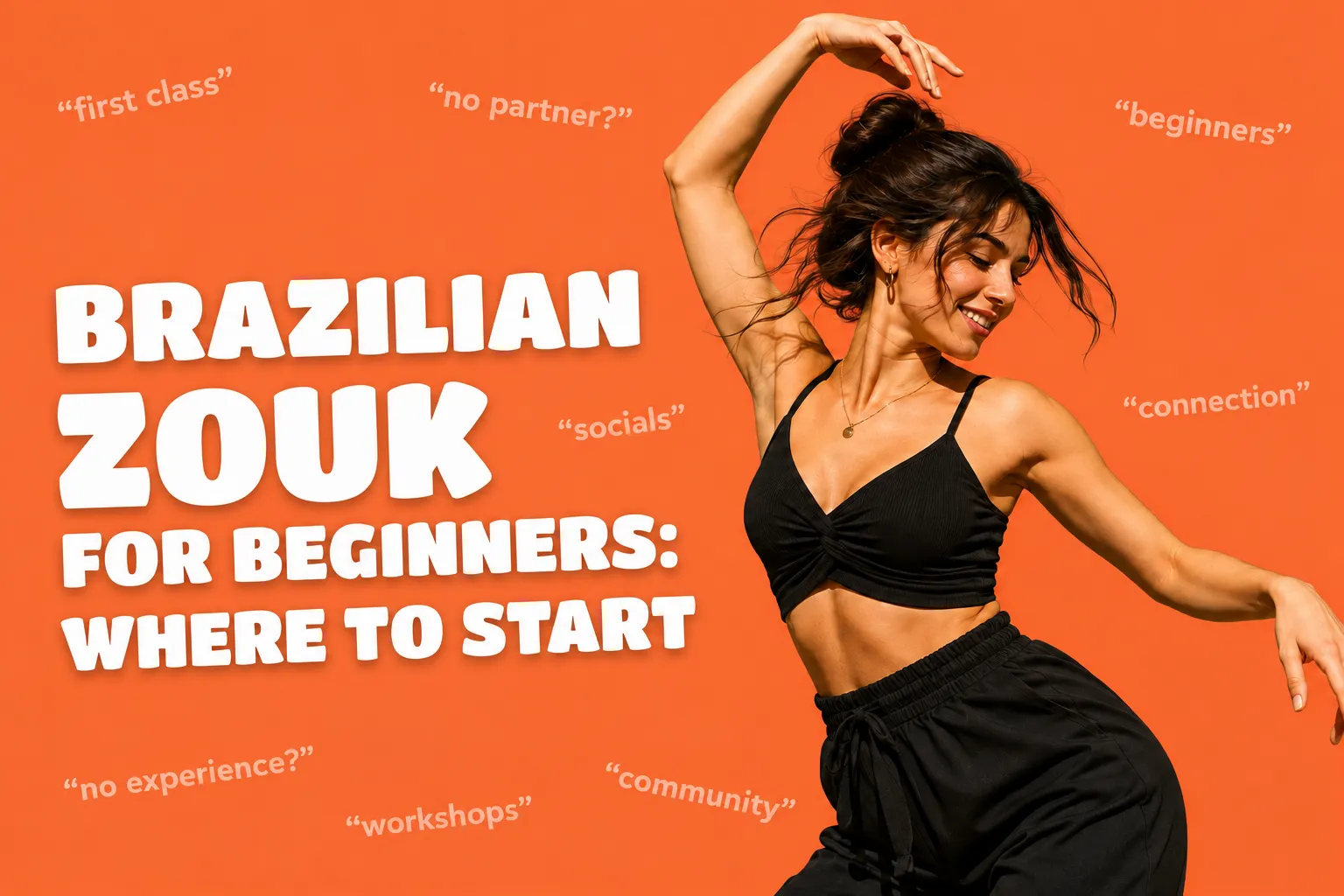
Getting started with Brazilian Zouk is easier than it might seem. You don't need previous dance experience, flexibility, or even a partner for your first class.
The most important step is finding a welcoming community and taking that first step.
If you've recently discovered Brazilian Zouk and aren't sure where to begin, this guide answers the most common questions beginners have.
What is Brazilian Zouk?
Brazilian Zouk is a partner dance developed in Brazil from the evolution of Lambada.
Known for its flowing movements, partner connection, and creativity, it is now danced in dozens of countries and brings together teachers, DJs, organizers, and dancers from all over the world.
If you'd like to learn more about its origins and evolution, check out our article What Is Brazilian Zouk?
Do I need dance experience?
The good news is: no.
Most people start Brazilian Zouk with no previous dance experience.
Beginner classes introduce the fundamentals, including posture, connection, timing, and basic movement patterns, before progressing to more advanced concepts.
The most important thing is being willing to learn and practice.
Do I need to be flexible?
Not at all.
Social media often showcases impressive head movements and deep backbends, but those belong to more advanced levels of the dance.
Your first classes will focus on building solid fundamentals, developing a comfortable connection with your partner, and learning movement safely.
Everyone progresses at their own pace.
Do I need to bring a partner?
No, you don’t.
Most schools and workshops rotate partners throughout the class. Dancing with different people helps everyone improve and develops important leading and following skills.
If you prefer attending with a friend or partner, that's perfectly fine too. Many classes allow you to dance together occasionally while still joining partner rotations whenever you feel comfortable.
How can I find a Brazilian Zouk class?
There are schools and teachers in many cities around the world.
A great place to start is by looking for local communities, teachers in your area, or beginner-friendly events.
If you're not sure where to begin, check out our article From Amsterdam to Oman: Where to Dance Brazilian Zouk Around the World, which highlights communities and dance scenes across different countries.
On Duo, you can also discover classes, teachers, communities, and Brazilian Zouk events in cities around the world, making it easier to find your first dance experience.
How do I practice outside of class?
Like any new skill, learning Brazilian Zouk doesn't stop when class ends.
Practice helps you build confidence, improve your connection with different partners, and make your movements feel more natural. It's also one of the best ways to meet other members of the community.
Some of the most common opportunities to practice include:
- Classes: regular lessons focused on technique.
- Practices: open practice sessions, often free, where dancers can review what they've learned.
- Socials: dance parties where people enjoy dancing together in a relaxed environment.
- Workshops: one-time classes that focus on a specific topic.
As your confidence grows, you may also enjoy attending weekenders, festivals, retreats, and other events that combine learning, social dancing, and community.
How can I improve my Brazilian Zouk?
There's no single path, but a few habits can make a big difference:
- attend classes consistently;
- go to practices and socials regularly;
- take workshops with different teachers;
- watch performances and demonstrations for inspiration;
- dance with different partners and get involved in the community.
Progress takes time. The most important thing is to enjoy the journey instead of comparing yourself to others.
Is it worth attending events?
Absolutely!
Besides weekly classes, Brazilian Zouk events can be a great opportunity to learn from new teachers, dance with people of different experience levels, and become part of the community.
You don't have to wait years before attending your first event. Many events include beginner-friendly activities and provide a welcoming environment to learn, practice, and make new friends.
On Duo, you can discover Brazilian Zouk events around the world, from classes and socials to festivals and workshops.
Ready to get started?
Starting Brazilian Zouk is much easier than most people imagine.
You don't need experience, a dance partner, or years of preparation. All you need is a welcoming community, your first class, and a willingness to keep practicing.
From there, new opportunities naturally follow: socials, workshops, festivals, and friendships that often cross borders.
If you're looking for your next step, Duo helps you discover teachers, communities, and events around the world.
Find your first class
Whether you're looking for in-person classes, online teachers, practices, socials, or festivals, Duo makes it easy to find Brazilian Zouk communities around the world and start your journey.


Frequently asked questions
Do I need to bring a partner to my first class?
No, you don't. Most schools rotate partners throughout the class so everyone has the chance to dance with different people and improve their skills.
I'm shy. Can I go by myself?
Absolutely. It's very common for people to attend their first class or event on their own. The Brazilian Zouk community is generally welcoming and supportive of newcomers.
I live in a small town. What if there aren't any classes nearby?
Not every city has a Brazilian Zouk school, but that doesn't mean you can't get started.
Today, many teachers offer online classes, as well as workshops and even virtual events. On Duo, you can also find teachers who teach online and discover both in-person and online events in different regions, making Brazilian Zouk accessible even if you don't live near a major city.
How long does it take to learn Brazilian Zouk?
It depends on how often you take classes and how much you practice. With consistent training, many beginners feel comfortable attending socials within their first few months.
What's the best way to improve?
The best approach is to combine regular classes with consistent practice. Attending socials, practices, and workshops will help you build confidence, meet new people, and develop your dancing more naturally.