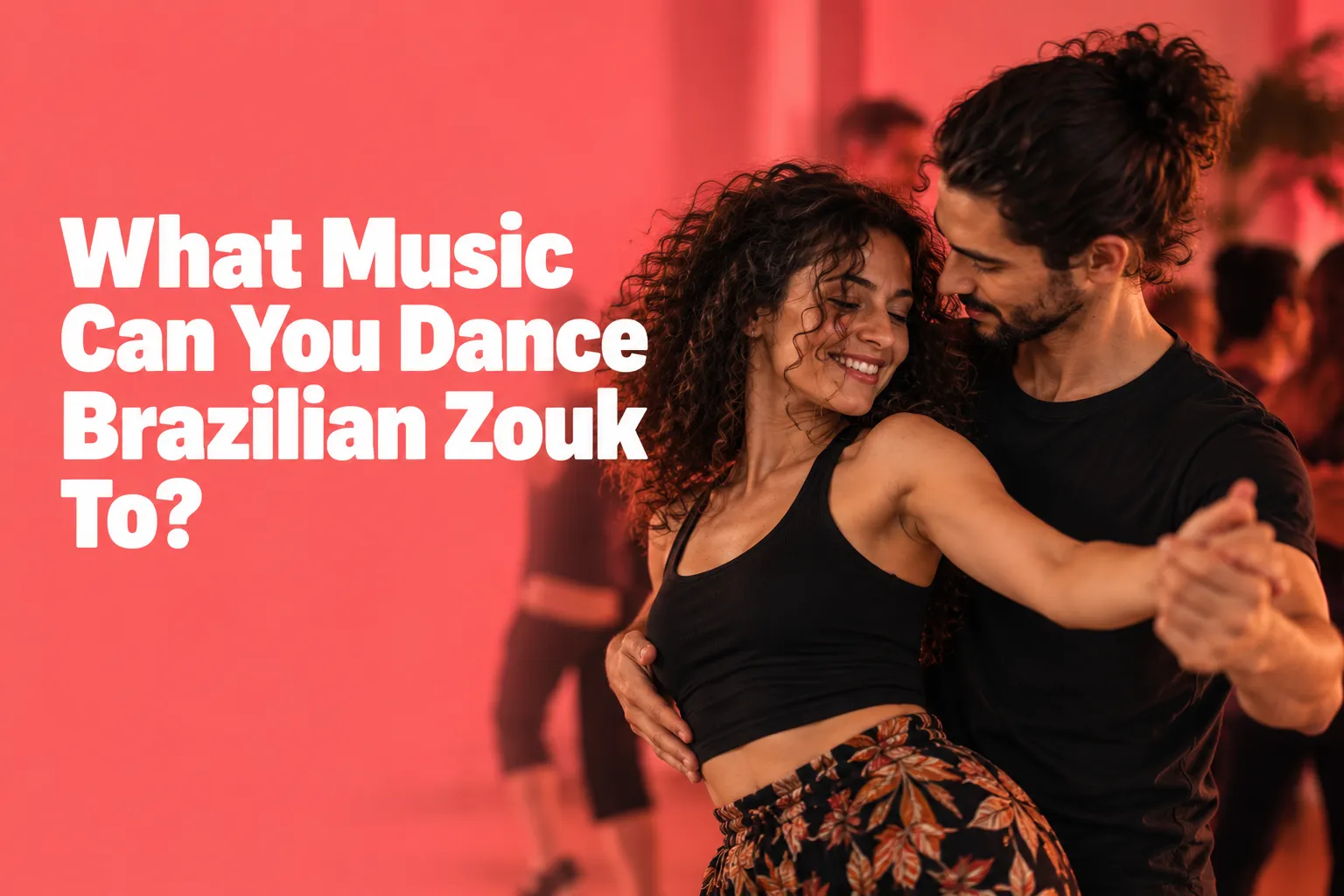
What Music Can You Dance Brazilian Zouk To?
Written by Larissa Ferreira
One of the first things that can be confusing about Brazilian Zouk is its music.
If Salsa is danced to Salsa and Bachata is danced to Bachata, does Brazilian Zouk have its own music too?
Not exactly.
Brazilian Zouk isn't limited to one music genre. Today, you may hear R&B, pop, electronic music, remixes, Caribbean Zouk and other sounds on a Brazilian Zouk dance floor.
But that doesn't mean every song automatically works for the dance.
So what makes a song Zoukable?
First: Brazilian Zouk is a dance, not a music genre
This distinction matters.
Zouk music developed in the French Antilles, particularly Guadeloupe and Martinique. Brazilian Zouk, on the other hand, is a partner dance that developed in Brazil from Lambada.
The connection between the two is historical.
As the Brazilian Zouk Dance Council explains in its history of Brazilian Zouk, dancers who had been dancing Lambada began adapting their movement to different music, including Caribbean Zouk. Eventually, the Brazilian dance became known as Brazilian Zouk.
We've explored that story in more detail in What Does Zouk Mean? The Story Behind the Name.
But here's the important part for music:
Brazilian Zouk didn't stop evolving there.
So, what music is Brazilian Zouk danced to today?
Quite a lot.
The Brazilian Zouk Encyclopedia describes today's repertoire as including Caribbean Zouk and Zouk Love alongside R&B, pop edits, electronic music, covers, remixes and original productions created for Brazilian Zouk dancers.
Other dance communities describe the same musical flexibility. Zouk Malmö, for example, notes that the dance is now practiced to many types of music, often including R&B.
That's why you might recognize a song at a Zouk social and think:
Wait... isn't this just a pop song?
It might be.
Sometimes DJs play tracks from other genres. Sometimes they use versions that have been edited or remixed specifically to work better for Brazilian Zouk.
So dancing Brazilian Zouk to a song doesn't turn that song into a new genre called “Brazilian Zouk music.”
It's still possible to dance Brazilian Zouk to music that wasn't originally created for Brazilian Zouk.
What makes a song work for Brazilian Zouk?
This is where things get more interesting.
Genre alone doesn't determine whether a track works.
According to the Brazilian Zouk Encyclopedia, DJs consider elements such as phrasing, flow, beat clarity, emotional arc and the possibilities a track gives dancers for interpretation.
Tempo matters too, but it isn't a magic formula.
DJ Zen Eyer's guide to Brazilian Zouk BPM describes a broad tempo range and specifically warns against using BPM alone to decide whether a song works for the dance. Phrasing, accents, timing and structure matter too.
And that's important because you'll find different BPM ranges depending on who you ask.
Rather than saying:
“A Brazilian Zouk song must have X BPM.”
it's more accurate to think:
Does this song give dancers enough musical information and structure to interpret it as Brazilian Zouk?
Two songs at the same tempo can create completely different experiences on the dance floor.
Why are remixes so common?
Because a song you love isn't necessarily structured in the most comfortable way for social dancing.
A Zouk remix can change elements such as tempo, phrasing, percussion, transitions or energy to make a track more suitable for the dance floor.
That's one reason familiar pop and R&B songs can sound slightly different when you hear them at a Brazilian Zouk event.
The original song may already work.
Another may need only a small edit.
And another might have the perfect mood but a structure that makes it difficult to dance Brazilian Zouk to comfortably.
So “I can imagine dancing Zouk to this” and “this is a good track for a Zouk social” aren't necessarily the same thing.
That's also where DJs come in.
Brazilian Zouk DJs don't just make playlists
A Brazilian Zouk DJ isn't simply collecting songs that dancers like.
A set also has its own structure.
The Brazilian Zouk Encyclopedia describes a DJ set as a musical journey that can balance familiar tracks and discoveries, different tempos, lyrical moments, stronger beats and changes in the energy of the room.
That means the question isn't always just:
“Is this song Zoukable?”
It can also be:
“Does this song work for this floor, at this moment?”
A DJ may choose something softer after several energetic tracks, introduce a familiar remix, change the mood or react to what dancers seem to be enjoying.
And that helps explain something else.
Why can Brazilian Zouk sound different around the world?
Because there isn't one mandatory Brazilian Zouk playlist.
Musical preferences can change between DJs, events and communities.
One dance floor might lean more heavily into R&B and pop edits. Another might include more electronic productions. Another may give more space to Caribbean Zouk or other musical influences.
Even within the same event, two DJs can create very different sets.
That musical openness has become part of Brazilian Zouk's identity.
It also means that discovering Brazilian Zouk music isn't necessarily about finding the definitive list of Zouk songs.
There isn't one.
How can you find music to dance Brazilian Zouk to?
Start with the people already shaping the dance floor.
Follow Brazilian Zouk DJs and producers, explore their public playlists and sets, and pay attention to the music you hear at socials, festivals and classes.
And when a song makes you want to dance, don't worry too much about whether its genre label says “Zouk.”
Listen instead.
Where is the beat?
Where do the phrases change?
Where does the music build tension or create space?
Where does it surprise you?
Because one of the most interesting things about Brazilian Zouk is that the dance isn't tied to just one sound.
The same dance can create completely different conversations with different music.
Find your next Brazilian Zouk dance floor with Duo
Music makes more sense when you experience it on the dance floor.
With Duo, you can discover Brazilian Zouk classes, socials, workshops and festivals around the world, and find the DJs, dancers and communities shaping how Brazilian Zouk sounds today.
Download Duo and discover your next dance.


Frequently asked questions
What kind of music is used for Brazilian Zouk?
Brazilian Zouk can be danced to different genres, including Caribbean Zouk, R&B, pop, electronic music, covers and remixes. The musical selection varies between DJs, events and communities.
Can you dance Brazilian Zouk to pop music?
Yes. Pop songs and pop remixes are commonly used for Brazilian Zouk when their tempo, phrasing, rhythm and structure work for the dance.
Does Brazilian Zouk have its own music genre?
Brazilian Zouk is the name of the Brazilian partner dance. Zouk is also the name of a Caribbean music genre with an important historical connection to the development and naming of the Brazilian dance, but the two shouldn't be treated as the same thing.
Does a song need a specific BPM for Brazilian Zouk?
There isn't one BPM that automatically makes a song suitable for Brazilian Zouk. Tempo matters, but DJs also consider factors such as phrasing, musical accents, structure, flow and the possibilities the track offers dancers.